6 Home Design Trends Defining 2026 | Sammamish Real Estate
Blog Kristi Jenkins September 16, 2026
Blog Kristi Jenkins September 16, 2026
2026 Home Trends | Interior Design Trends | Sammamish & Eastside Real Estate
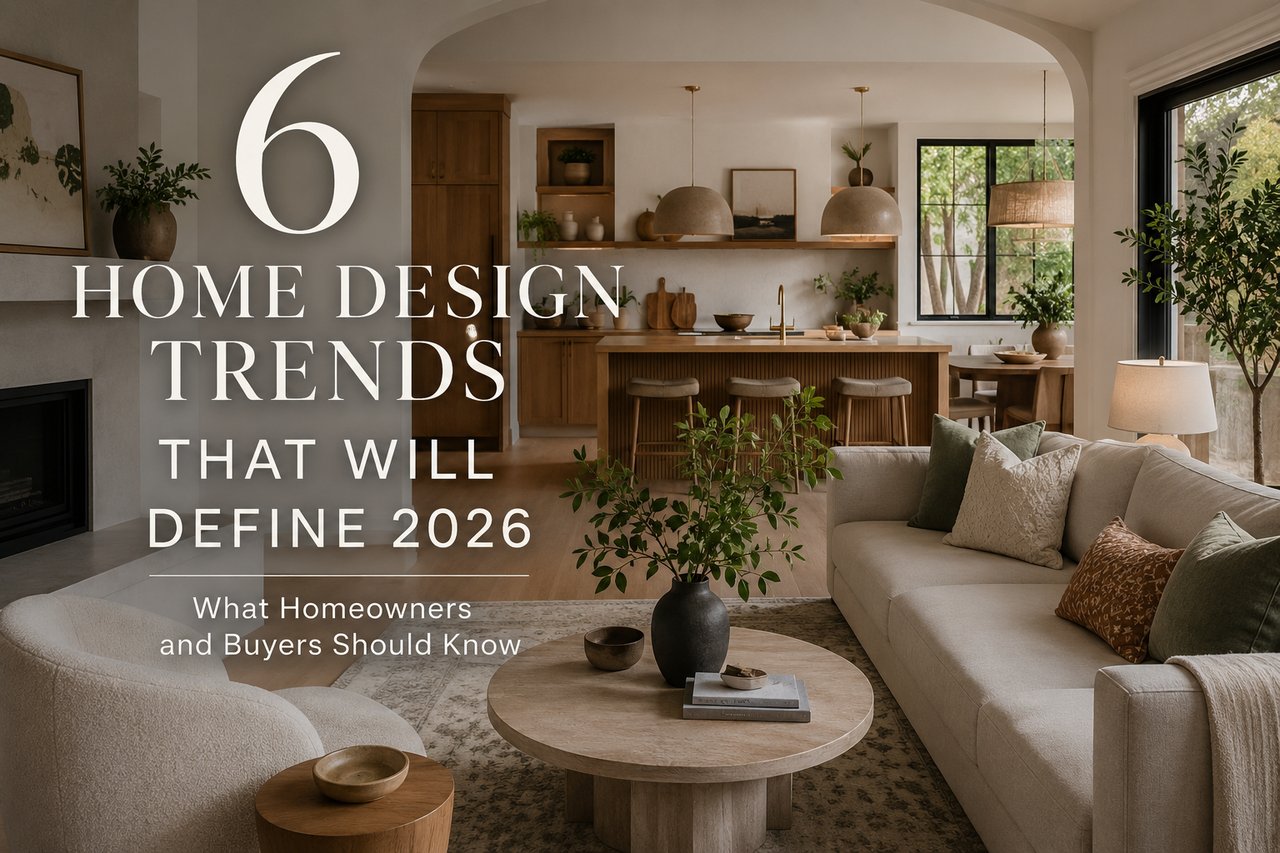
Home design is changing, and in 2026, the biggest shift isn't about following a single decorating style. It's about creating homes that feel warmer, more personal, more functional, and better aligned with the way people actually live.
Across the latest design forecasts, one theme continues to stand out: homeowners are moving away from sterile, overly coordinated interiors and toward spaces with personality, natural materials, layered textures, flexible functionality, and a strong connection to comfort and wellness.
For homeowners in Sammamish, Bellevue, Redmond, Kirkland, Issaquah, and throughout the greater Eastside, these trends are worth watching, not simply because they're stylish, but because thoughtful design choices can influence how a home feels, functions, photographs, and ultimately appeals to future buyers.
Here are 6 home design trends expected to grow even bigger in 2026.
1. Warm, Earthy Color Palettes Are Replacing Stark White
For years, bright white walls and cool gray interiors dominated new construction, renovations, and home staging.
In 2026, we're seeing a noticeable move toward warm, grounded color palettes.
Think:
Warm whites and creamy neutrals
Taupe and mushroom
Terracotta and clay
Muted greens
Deep blues
Rich browns
Warm wood tones
The goal isn't necessarily to make a room dark. It's to make it feel comfortable, sophisticated, and connected to nature.
Designers are increasingly using color to create atmosphere rather than simply make a room appear larger. Warm tones can add depth and character while helping a space feel more inviting and lived-in.
If you're preparing to sell, you don't have to completely repaint your home in the latest trend color.
Instead, consider incorporating warmth through paint, textiles, artwork, furniture, and accessories while maintaining a timeless foundation.
2. Natural Wood Is Making a Strong Comeback
One of my favorite 2026 trends is the renewed appreciation for natural wood and visible craftsmanship.
Rather than hiding the character of wood beneath highly uniform finishes, homeowners and designers are embracing:
Oak
Walnut
Reclaimed wood
Natural wood cabinetry
Wood-paneled walls
Exposed grain
Handmade or artisan-inspired furniture
Natural wood brings warmth and texture to a home and it works beautifully with both traditional and contemporary architecture.
Vogue's 2026 trend report points to natural, often unfitted wood kitchens and darker wood tones as part of a broader movement toward interiors that feel collected rather than mass-produced.
For Eastside homes, this trend can be particularly effective because it complements the Pacific Northwest's natural surroundings.
3. Curves and Soft Geometry Are Taking Over
Straight lines aren't disappearing, but they're getting some competition.
Curved furniture, arched doorways, rounded islands, scalloped details, and softer architectural forms are becoming increasingly popular.
Houzz's 2026 search data shows significant increases in interest for features such as scalloped tile, arched range hoods, arched pantry doors, rounded kitchen islands, curved peninsulas, and curved staircases.
Why the shift?
Curves create a sense of softness and movement. They can make a room feel less rigid and more welcoming.
You don't need to remodel your entire home.
Try:
A curved sofa
Round coffee table
Arched mirror
Curved accent chair
Rounded kitchen island
Sculptural lighting
Arched interior doorway
A few intentional changes can completely change the feel of a room.
4. Texture Is Becoming Just as Important as Color
One of the biggest interior design trends for 2026 is tactile design.
Homeowners are looking for surfaces and materials that invite you to touch them, not just look at them.
That includes:
Linen
Natural stone
Venetian plaster
Limewash
Seagrass
Terracotta
Hand-finished wood
Textured wallpaper
Bouclé and woven fabrics
Houzz reported major increases in searches for sandstone, linen wallpaper, seagrass wallpaper, Venetian plaster, terracotta flooring, and limewash finishes in 2026.
The result is a home with more visual depth and sensory appeal.
This is especially useful when designing neutral interiors. Instead of relying on lots of colors, you can create interest through different textures and materials.
5. The "Lived-In" Home Is In
Perhaps the biggest overarching design trend of 2026 is that homes are becoming less perfect and more personal.
We're moving away from interiors that look like nobody actually lives there.
Instead, designers are embracing:
Vintage furniture
Family heirlooms
Books
Collected artwork
Handmade pieces
Travel finds
Natural imperfections
Layered textiles
Meaningful objects
The goal is a home that feels collected over time rather than purchased all at once.
Current design forecasts consistently point toward individuality, nostalgia, craftsmanship, and personality as defining characteristics of 2026 interiors.
And honestly, I love this direction.
A beautiful home doesn't have to look untouched. It should look like someone you want to know lives there.
6. Wellness Spaces Are Becoming Part of Everyday Home Design
Wellness is no longer limited to a gym membership or a spa day.
In 2026, homeowners are incorporating wellness directly into the home through spaces designed to support rest, relaxation, movement, and mental well-being.
Depending on the home, that might look like:
Home saunas
Cold plunges
Dedicated fitness rooms
Meditation spaces
Spa-inspired bathrooms
Reading nooks
Quiet bedrooms
Outdoor relaxation areas
Better natural lighting
Dedicated spaces for hobbies
The broader design industry is increasingly treating comfort and wellness as fundamental elements of residential design rather than optional extras.
For luxury homes, wellness features can also become meaningful lifestyle amenities that differentiate a property.
What These 2026 Home Trends Mean for Sellers
If you're thinking about selling your home in Sammamish or anywhere on the Eastside, there's an important distinction to make:
A design trend isn't automatically a good home improvement.
The best updates are the ones that balance current appeal with long-term value.
Before investing in a major renovation, ask:
Will this improve how buyers experience the home?
Is the improvement appropriate for the neighborhood?
Will it photograph well?
Does it improve functionality?
Is the design timeless enough to appeal to a broad range of buyers?
Will I personally enjoy the improvement if I remain in the home for several years?
A trendy finish may look fantastic on Instagram but provide little return when it comes time to sell.
On the other hand, improvements such as thoughtful lighting, quality materials, functional spaces, updated kitchens and bathrooms, attractive outdoor living areas, and cohesive design can improve both livability and marketability.
What These Trends Mean for Buyers
For buyers, 2026's design direction offers an encouraging reminder:
You don't have to find a perfectly finished home to find the right home.
A property with a strong floor plan, great location, natural light, quality construction, and good bones may offer far more long-term potential than a home that simply happens to have the latest finishes.
Paint can change.
Light fixtures can change.
Cabinet hardware can change.
But location, architecture, lot characteristics, views, privacy, and the overall functionality of a home are much harder to replicate.
That's why I encourage buyers to look beyond the surface and evaluate what a home could become.
Thinking About Buying or Selling on the Eastside?
If you're considering a move in Sammamish, Bellevue, Redmond, Kirkland, Issaquah, or throughout the greater Eastside, I'd love to help you look beyond the trends and understand what actually matters for your specific home, neighborhood, and goals.
After more than two decades in real estate, I've learned that a successful real estate decision is about much more than a home's current appearance. It's about location, market positioning, lifestyle, future potential, and making smart decisions at the right time.
I'm Kristi Jenkins, Managing Broker at Kristi Jenkins Real Estate and your Realtor for Life.
Thinking about your next move? Let's talk.
More Articles:
A Big Change Is Coming to the Washington Real Estate Market
7 Outdated Home Decor Trends to Rethink in 2026
Buying a Home Doesn't Have to Feel Overwhelming, When You Know What's Coming Next

Blog

Blog
Blog
Blog

Blog
Blog

Blog
Blog

Blog
With a 20-year total of more than $100M in sales, her experience shines through. Whether she’s working with first-time home buyers or seasoned investors in a complex deal, Kristi walks through each stage of the home sale and makes sure you feel supported and understood.