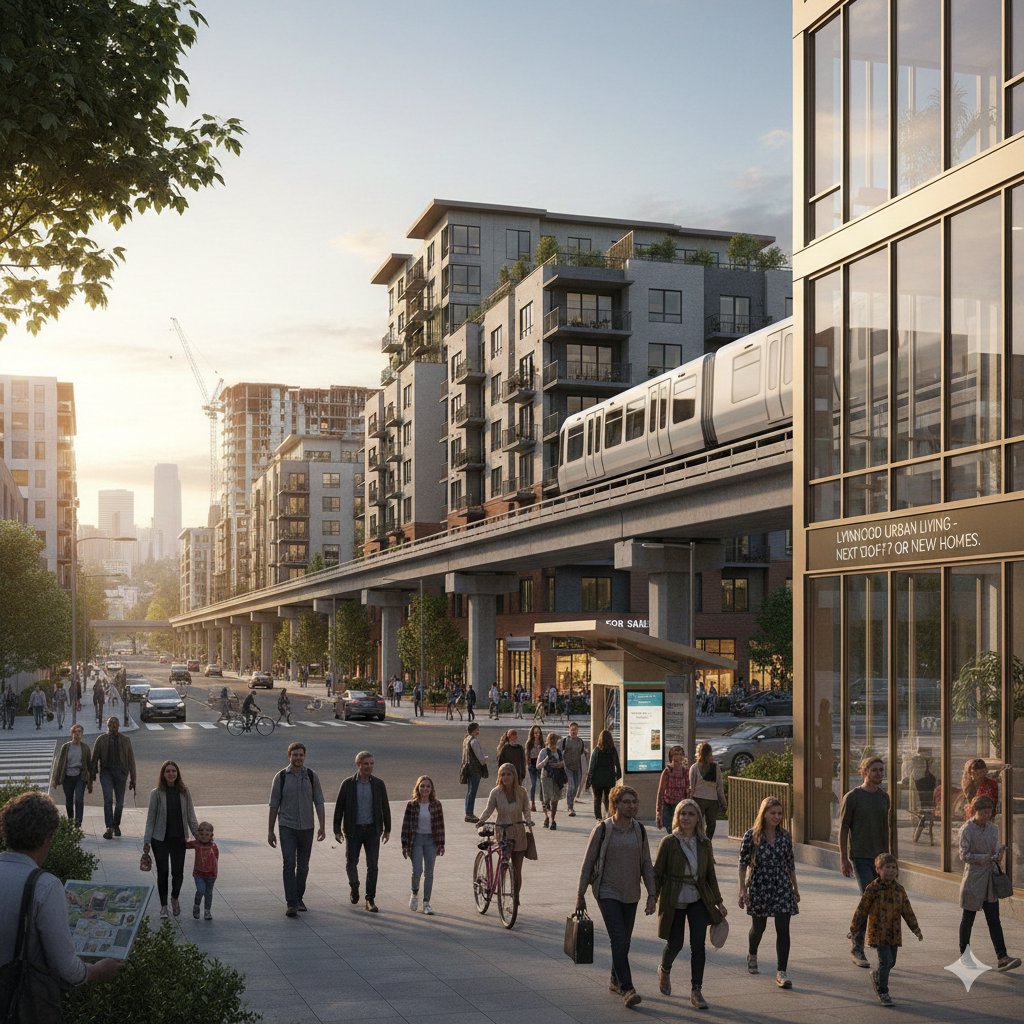
Light Rail’s Impact on Housing Demand in Lynnwood, Bellevue & Beyond
Blog Kristi Jenkins December 11, 2025
Blog Kristi Jenkins December 11, 2025
The Lynnwood Link Extension, which officially opened on August 30, 2024, adds 8.5 miles to the existing line, connecting Northgate to Lynnwood via new stations in Shoreline and Mountlake Terrace. Initially, it’s served by the 1 Line, with plans for integration into the 2 Line by 2026.
This expansion drastically improves access, enabling more efficient, car-free commutes to central Seattle. Local governments and transit agencies are positioning the new stations to become regional mobility hubs.
One of the most visible effects of the extension is the surge in transit-oriented development (TOD) around the new stations.
In Lynnwood City Center, city leaders have green-lighted plans for up to 6,000 apartments, doubling previous density caps to better accommodate growth along the rail corridor.
According to Sound Transit and local reports, over 10,000 housing units are either planned or under construction within walking distance of the new light rail stations.
On Sound Transit property alone, there are 3,300 new homes, and notably, 2,200 of those are affordable units.
A project called Housing Hope is developing 160 affordable homes next to the Lynnwood City Center station, with many units designed for larger families.
These developments reflect a broader strategy: fostering walkable, mixed-use neighborhoods that reduce reliance on cars while attracting a diverse mix of residents.
Here’s how the extension is already influencing the real estate market in Lynnwood and surrounding areas:
Connectivity Drives Appeal
Proximity to rail lowers the “friction” of commuting, making Lynnwood more attractive to professionals who work in Seattle or along the Eastside.
Light rail also links residents to key regional job centers, increasing the area’s appeal.
Rising Home Values
Properties near transit typically command a premium. A report from SJA Property Management notes that Bellevue’s real estate has seen double-digit annual growth, in part attributable to its light rail connections.
In Lynnwood, the shift from suburban strip-mall land toward denser urban housing is driving strong buyer competition.
Investor & Developer Momentum
While the opportunity is huge, there are also potential risks and headwinds:
Infrastructure Growing Pains: Sound Transit plans to mitigate rider crowding by increasing train frequency during peak hours, but adjustments may take time as ridership scales.
Zoning & Design Tensions: Not all property value gains are automatic. According to a city planning report, factors like zoning, neighborhood quality, and thoughtful design significantly influence how real estate benefits accrue.
Delayed Eastside Expansion: The extension of full 2 Line light rail service (which would connect Lynnwood up to Bellevue) has seen delays, potentially slowing some expected commuter flows.
Community Displacement: As density increases near transit, long-time residents may face displacement pressures. The influx of new development, especially if driven by market-rate housing, could alter the socio-economic fabric of neighborhoods.
Given the current landscape, here’s what different stakeholders should consider:
For Homebuyers:
Prioritize properties within walking distance of the Lynnwood, Mountlake Terrace, or Shoreline stations.
Factor in long-term appreciation tied to transit access, even if upfront prices are higher, value could grow faster.
Investigate mixed-use or TOD projects, especially those with affordable components, since they often offer stronger long-term returns.
For Investors:
Multifamily and apartment buildings near the new stations are prime targets. With thousands of units already in planning or under construction, demand is real.
Consider development partnerships with local agencies or non-profits: transit authorities often support projects that include affordable housing.
Monitor ridership trends: as more people use the extension, commercial opportunities (retail, small business) in station-adjacent zones could also grow.
For Communities and Policy Makers:
Continue to support zoning reforms, capacity for high-density housing, and incentives for affordable units near stations.
Invest in pedestrian infrastructure, green spaces, and walkable street design to maximize the benefits of transit-oriented development.
Engage residents early in planning to minimize displacement and ensure equitable growth.
More Articles:
From Beepers to Bidding Wars: Buying a Home in 1995 vs. 2025
Homeowner Tax Deductions You Probably Didn’t Know About (But Should!)
Blog

Blog

Blog

Blog

Blog

Blog

Blog

Blog

Blog
With a 20-year total of more than $100M in sales, her experience shines through. Whether she’s working with first-time home buyers or seasoned investors in a complex deal, Kristi walks through each stage of the home sale and makes sure you feel supported and understood.