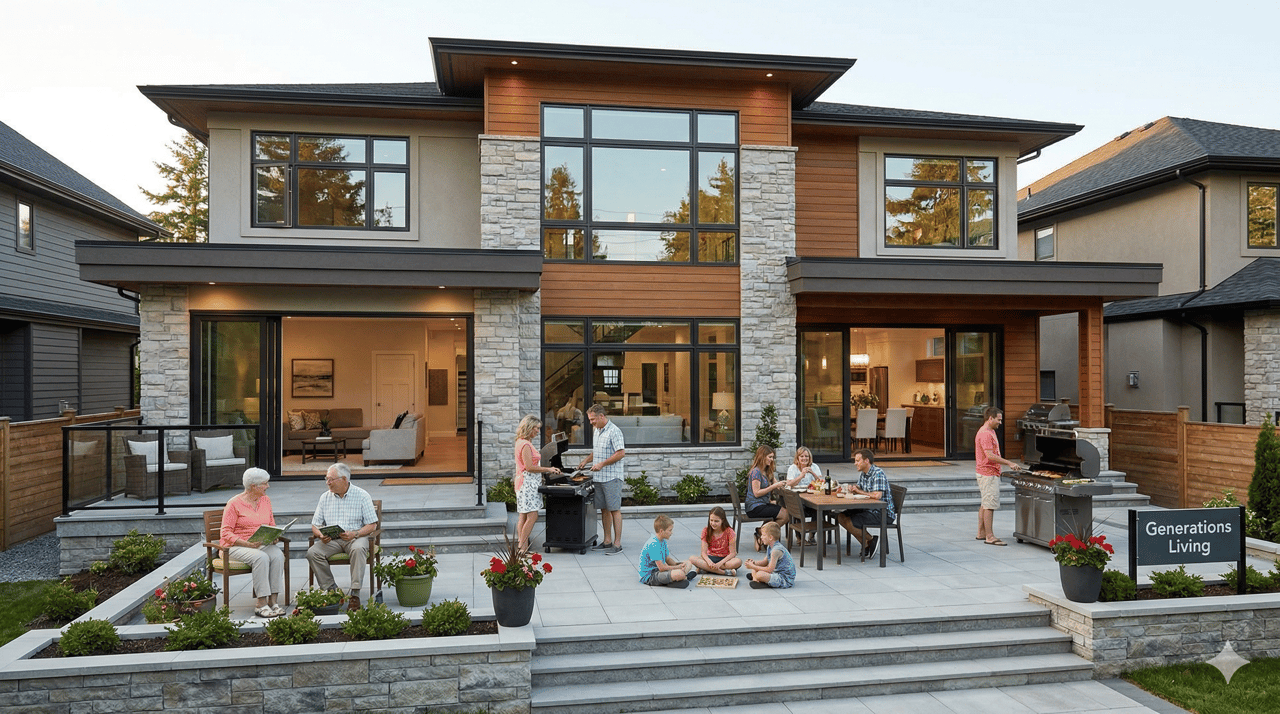
Making Room for More: The Rise of Multigenerational Homes in Seattle Real Estate
Blog Kristi Jenkins April 20, 2026
Blog Kristi Jenkins April 20, 2026
A multigenerational home is designed to accommodate two or more generations living together. This could include:
Parents and children
Grandparents and grandchildren
Adult children returning home
Extended family members sharing a single property
These homes often feature separate living areas, additional bedrooms, or even private entrances to support both togetherness and independence.
Seattle’s real estate market has long been competitive, with rising home prices and limited inventory. As a result, families are getting creative with how they use space.
Pooling financial resources makes homeownership more attainable. By sharing mortgage payments, utilities, and maintenance costs, families can afford larger or better-located homes.
Many families are choosing to care for aging parents at home rather than in assisted living facilities. Multigenerational homes allow for comfort, proximity, and support.
Living together fosters deeper relationships and daily interaction, something many families are prioritizing more than ever.
From remote work to changing life stages, multigenerational homes offer the flexibility to adapt over time.
Not all homes are designed with multiple generations in mind. When searching in Seattle, prioritize properties with:
Separate entrances: Ideal for privacy and independence
Dual kitchens or kitchenettes: Allows for separate meal prep
Finished basements or ADUs (Accessory Dwelling Units): Great for private living spaces
Extra bathrooms and bedrooms: Reduces daily friction
Open common areas: Encourages shared time together
Neighborhoods across Seattle and surrounding areas are increasingly offering homes with these features, especially as demand grows.
Certain neighborhoods are particularly well-suited for multigenerational households due to space, home styles, and community amenities:
North Seattle: Known for larger lots and quieter residential areas
West Seattle: Offers a suburban feel with proximity to the city
Beacon Hill: Diverse housing options and accessibility
Ballard: Mix of modern homes and properties with ADUs
Each area offers unique advantages depending on your family’s needs, commute, and lifestyle.
While multigenerational living offers many benefits, it’s important to plan ahead:
Privacy concerns: Clear boundaries and designated spaces are essential
Zoning and regulations: Not all Seattle properties allow ADUs or conversions
Resale considerations: Ensure the home appeals to future buyers
Lifestyle compatibility: Open communication is key to making it work
Understanding these factors can help you avoid common pitfalls and create a more harmonious living environment.
Once you’ve found the right home, thoughtful design can make all the difference:
Use soundproofing materials for added privacy
Create shared and private zones within the home
Incorporate universal design features for accessibility
Add flexible spaces that can evolve with your family’s needs
These upgrades can improve both comfort and long-term usability.
Multigenerational homes in Seattle are more than just a trend, they’re a practical and meaningful solution to modern housing challenges. By combining resources, strengthening family bonds, and maximizing space, these homes offer a lifestyle that’s both efficient and enriching.
Whether you’re planning for aging parents, supporting adult children, or simply looking for a more connected way to live, multigenerational housing could be the perfect fit.
More Articles:
My Most Asked Real Estate Questions (Seattle & Eastside Edition)
Your Starter Home Has One Job: Get You in the Game
Wood Kitchen Cabinets Take the Lead: Why Homeowners Are Choosing Natural Finishes Over White in 2026

Blog

Blog

Blog

Blog

Blog

Blog

Blog

Blog

Blog
With a 20-year total of more than $100M in sales, her experience shines through. Whether she’s working with first-time home buyers or seasoned investors in a complex deal, Kristi walks through each stage of the home sale and makes sure you feel supported and understood.